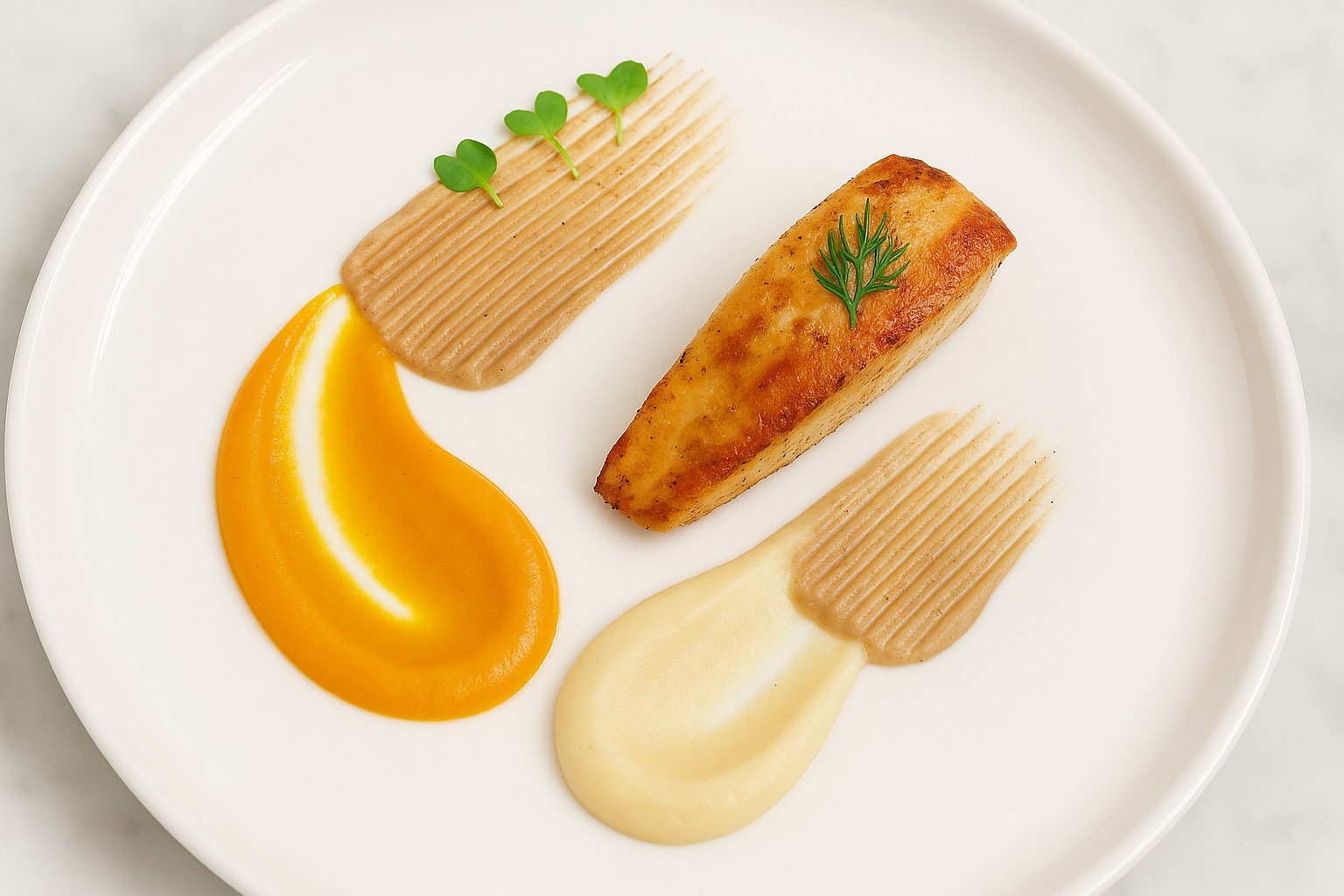
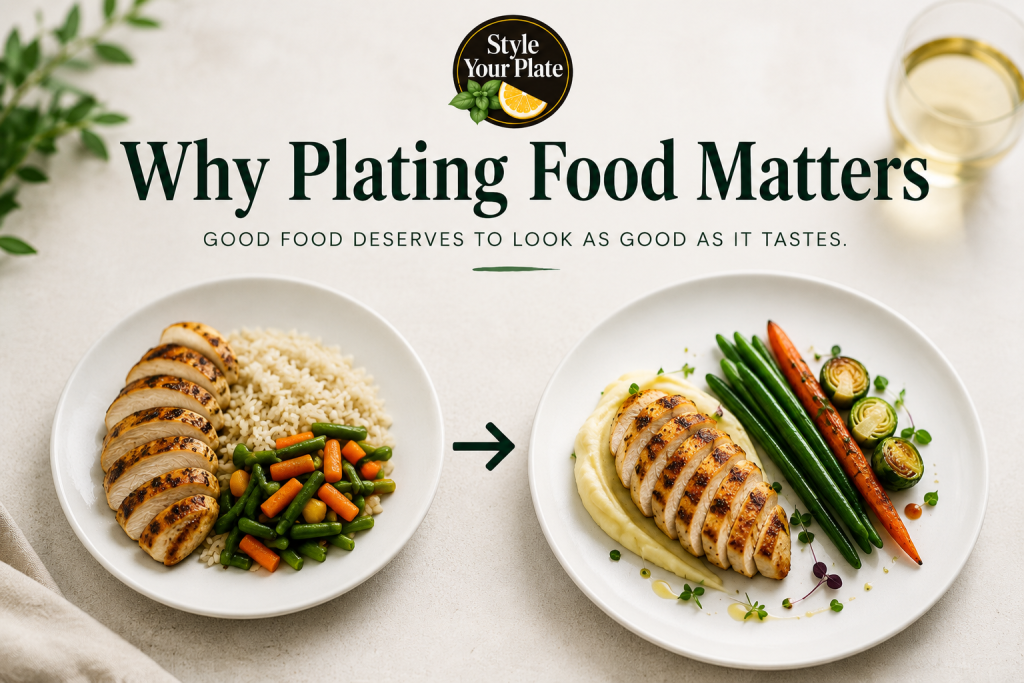
We Eat With Our Eyes First
Before we take the first bite, we’ve already formed an opinion.
The color, arrangement, height, and balance of a dish create anticipation. A beautifully presented meal makes us expect something delicious before we’ve even tasted it.
Plating doesn’t change the recipe, but it changes the experience.
It Shows Pride in Your Cooking
- You spent time shopping.
- You selected ingredients.
- You seasoned carefully.
- You cooked everything to the right temperature.
- Why rush the final 30 seconds?
- Presentation is simply the finishing touch that says, “I cared enough to do this well.”
Food Actually Tastes Better
Scientists have studied this for years.
When food is presented attractively, people often rate it as tasting better and being more enjoyable, even when the ingredients are identical.
Presentation influences expectation, and expectation influences perception.
It Makes Everyday Meals Feel Special
- You don’t need a birthday.
- You don’t need guests.
- You don’t need expensive ingredients.
- A Tuesday night chicken dinner can feel like a restaurant meal with just a minute of extra attention.
It Impresses Guests
- Whether you’re cooking for:
- family
- friends
- a date
- holidays
- Presentation communicates care.
- People notice.
- Even if they can’t explain why.
It’s Easier Than Most People Think
Many people assume restaurant presentation takes years of culinary training.
It doesn’t.
Most improvements come from simple ideas:
- creating height
- adding color
- leaving negative space
- using garnish intentionally
- arranging food instead of piling it
Most StyleYourPlate tips take one or two minutes.
It Costs Almost Nothing “The biggest improvement to your meal often costs nothing.”
- You’re simply arranging the food differently.
- No expensive equipment.
- No special ingredients.
- No culinary degree.
Cooking Is Partly Visual
We photograph our food.
We share meals online.
We celebrate birthdays around the dinner table.
Food creates memories.
Presentation helps make those memories more memorable.
Plating Helps Reduce Food Waste
One of the simplest ways to reduce food waste starts before anyone takes the first bite.
Instead of placing large portions on every plate, serve a thoughtfully sized portion to each guest. Keep the remaining food in serving bowls or platters on the table.
If someone is still hungry, they can always enjoy a second helping.
If they’re full or decide not to eat a particular side dish, the untouched food remains in the serving bowl instead of being scraped into the trash.
The result is less waste and more leftovers that can be enjoyed another day or sent home with guests.
Better Portions Create Better Meals
Restaurants carefully portion every plate for a reason. A well-balanced plate is more appealing to the eye and often provides all the food most people need.
Serving moderate portions also encourages guests to slow down and enjoy the meal rather than feeling obligated to finish an oversized serving.
When second helpings are available, everyone eats according to their appetite instead of according to the size of their first serving.
Save Money by Cooking Less
Many home cooks prepare far more food than their family or guests will actually eat.
Over time, serving plated portions with additional food available on the table often reveals how much people really consume.
Many families discover they can prepare slightly less food without anyone leaving the table hungry.
Less wasted food means fewer groceries, lower food costs, and a refrigerator full of leftovers that are more likely to be eaten instead of discarded.
Plating isn’t about serving less food. It’s about serving the right amount first.
Guests can always enjoy another helping, but food that never reaches a plate is much less likely to end up in the trash.