Let the Plate Set the Stage
The plate is part of the presentation. Its size, shape, color, and style can change how the food looks before anyone takes a bite. Choose a plate that supports the dish and gives the ingredients enough room to stand out.
Why It Works
A well chosen plate creates contrast, defines the boundaries of the presentation, and helps control visual balance. A plate that is too small can make food look crowded, while one that is too large can make the portion look lost. The right plate gives the food space without overwhelming it.
The Technique
Choose the Right Size
Select a plate that leaves some visible space around the food. The ingredients should feel contained, but not packed tightly from edge to edge.
Think About Shape
Round plates are versatile, but shallow bowls, oval plates, and rectangular plates can work well for certain dishes. Match the shape of the plate to the way you want the food to flow.
Use Color for Contrast
White and neutral plates work with almost anything, but darker or colored plates can make pale foods stand out. Choose a plate color that complements the food instead of competing with it.
Match the Plate to the Dish
A casual meal may look best on a simple plate, while a more refined presentation may benefit from a wider rim, textured ceramic, or another distinctive surface. The plate should fit the style of the food.
Quick Tips
- Leave visible space around the food.
- Avoid plates that make the portion look crowded.
- Use neutral colors when the food already has strong color.
- Choose darker plates carefully for light colored dishes.
- Let the plate support the presentation instead of becoming the focal point.
Before and After
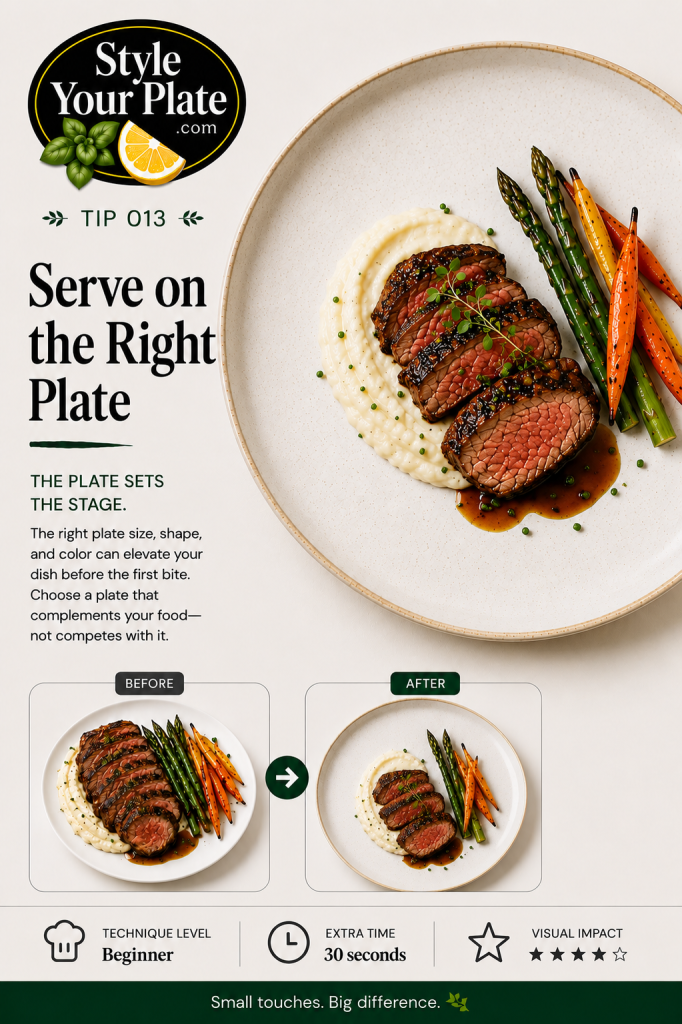
The before plate uses a smaller surface that fills quickly, making the ingredients feel crowded and leaving little negative space around the food.
The after plate uses a larger plate with more open space around the ingredients. The additional room helps define each element and gives the overall presentation a cleaner, more intentional appearance.
Try It Yourself
Before plating your next meal, compare two different plates. Place the same portion on each and notice how the size, color, and shape change the presentation. Choose the one that gives the food enough room to stand out without making the portion look too small.
Email us anytime at: