Give Your Plate More Dimension
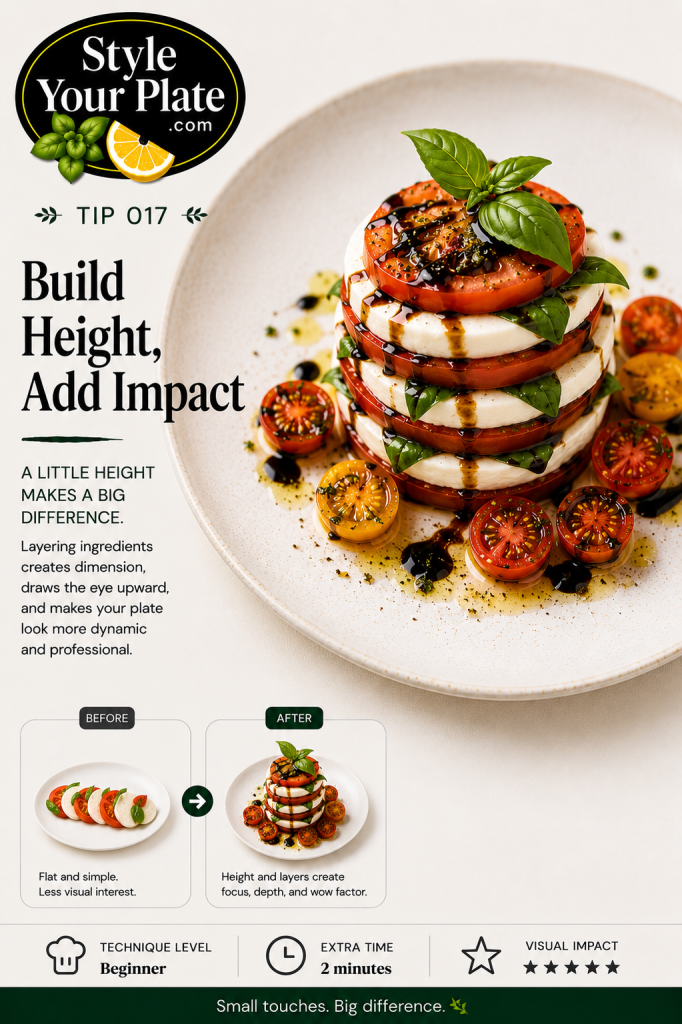
A little height can completely change how a dish looks. Instead of arranging every ingredient flat across the plate, stack or layer compatible ingredients to create dimension and a stronger focal point. Height draws the eye upward and can make even simple food feel more thoughtfully presented.
Why It Works
Flat arrangements tend to spread attention across the plate. Building upward concentrates the composition and gives the eye a natural place to land. Height also creates shadows, layers, and visible separation between ingredients, adding depth and making the plate feel more dynamic.
The Technique
Choose Ingredients That Stack Well
Look for ingredients with enough structure to hold their shape. Tomato slices, mozzarella, roasted vegetables, sliced proteins, polenta, potatoes, and firm grains can all work well in layered presentations.
Build from a Stable Base
Start with the widest or most stable ingredient on the bottom. Keep the center of gravity low enough that the arrangement will stay in place when the plate is carried to the table.
Repeat the Layers
Repeating two or three ingredients creates rhythm and makes the height feel intentional. Keep the layers relatively even rather than building an unstable tower.
Finish the Top
Use the top of the stack as a focal point. A few fresh herbs, microgreens, a small garnish, or a drizzle of sauce can finish the composition and reinforce the vertical shape.
Quick Tips
- Start with a stable base.
- Stack ingredients that naturally belong together.
- Repeat layers to create rhythm.
- Keep the height proportional to the plate.
- Avoid building so high that the food becomes difficult to eat.
- Add the final garnish at the top to draw the eye upward.
Before and After
The before plate arranges the ingredients in a flat line. The food is neat and easy to recognize, but there is little variation in height or depth.
The after plate stacks the same basic ingredients vertically. The layers create a strong focal point, add dimension, and give the presentation noticeably more visual impact.
Try It Yourself
Choose one part of your next meal that can be layered instead of placed flat. Stack tomato and mozzarella, overlap sliced vegetables, or rest a protein partly on top of a side. You do not need a dramatic tower. Even a small increase in height can make the plate feel more intentional.
Email us anytime at: