Give Your Food Room to Breathe
You do not need to fill every inch of the plate. Leaving intentional empty space around the food creates focus, makes the presentation feel cleaner, and allows each ingredient to stand out. Sometimes what you leave off the plate is just as important as what you put on it.
Why It Works
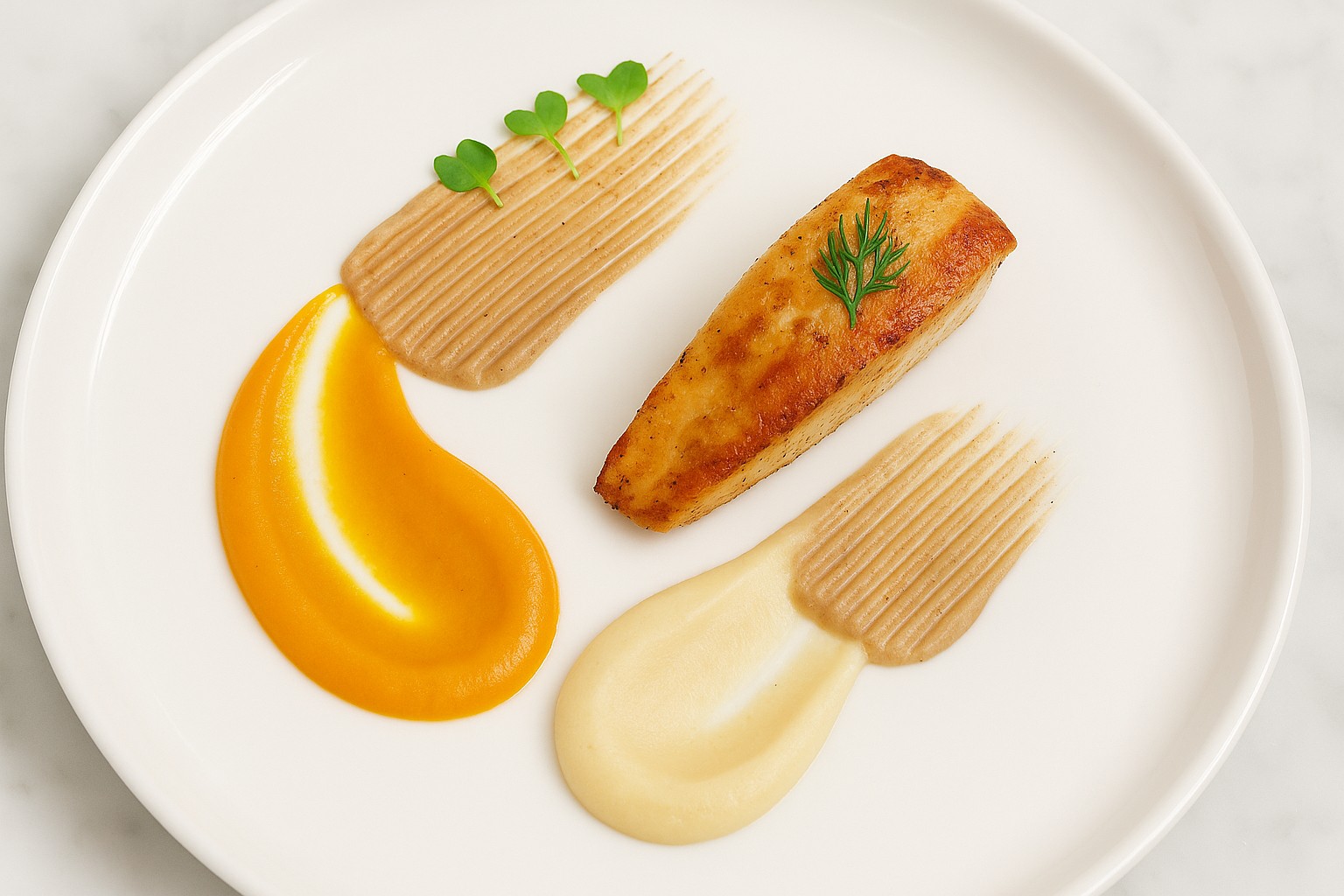
Negative space gives the eye a place to rest. When ingredients are surrounded by open space, the main elements become easier to see and the plate feels less crowded. It also creates contrast between the food and the plate, helping even simple ingredients feel more intentional.
The Technique
Start with Less
Resist the instinct to spread food across the entire plate. Begin by arranging the main components in a smaller area and see how much open space remains.
Create a Focal Area
Group the main ingredient and supporting elements so they feel connected. Concentrating the food in one area creates a clear focal point and allows the surrounding plate to become part of the presentation.
Use Space Intentionally
Negative space should look deliberate, not unfinished. Balance the food and open areas so the composition feels purposeful rather than simply pushed to one side.
Keep Garnishes Controlled
Do not fill empty areas just because they are available. A few sauce dots, herbs, or other small accents can add balance, but leave enough untouched space for the technique to work.
Quick Tips
- Do not feel obligated to fill the entire plate.
- Group ingredients instead of spreading them everywhere.
- Leave visible space around the main ingredient.
- Use a larger plate when you need more breathing room.
- Keep sauces and garnishes controlled.
- Let empty space help define the focal point.
Before and After
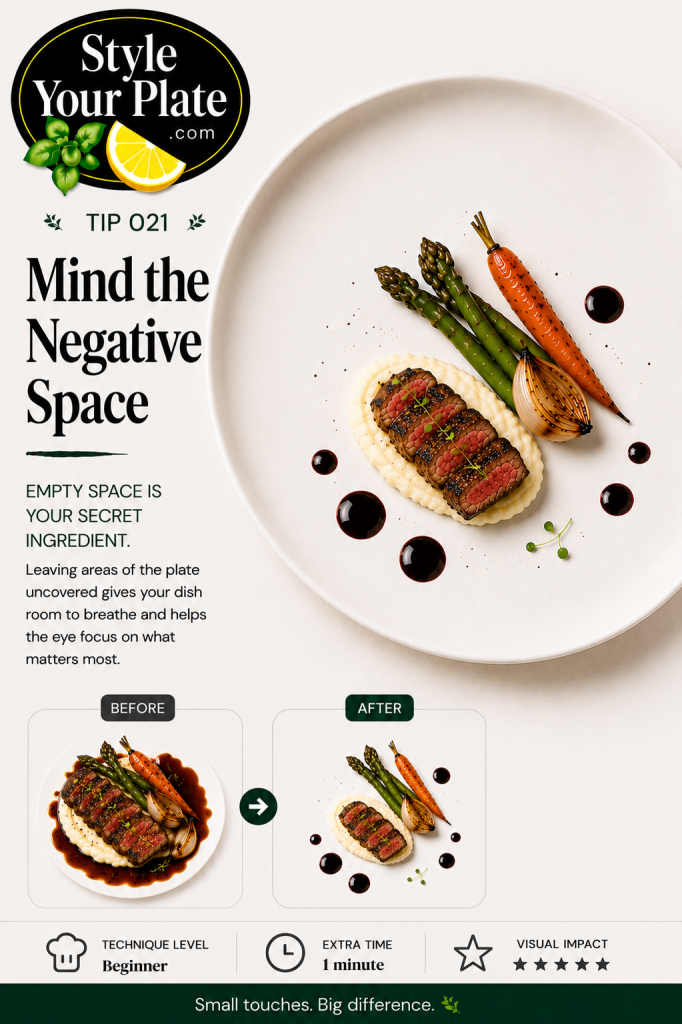
The before plate fills much of the available surface with food and sauce. The ingredients compete for attention, and there is little open space to separate the different elements.
The after plate uses a more compact arrangement with generous negative space around the food. The main ingredient becomes easier to identify, the individual components stand out, and the entire presentation feels cleaner and more focused.
Try It Yourself
The next time you plate dinner, stop before filling the empty areas. Group the main components together and leave part of the plate completely uncovered. If the food looks balanced and your eye naturally goes to the main ingredient, the empty space is doing its job.
Email us anytime at: