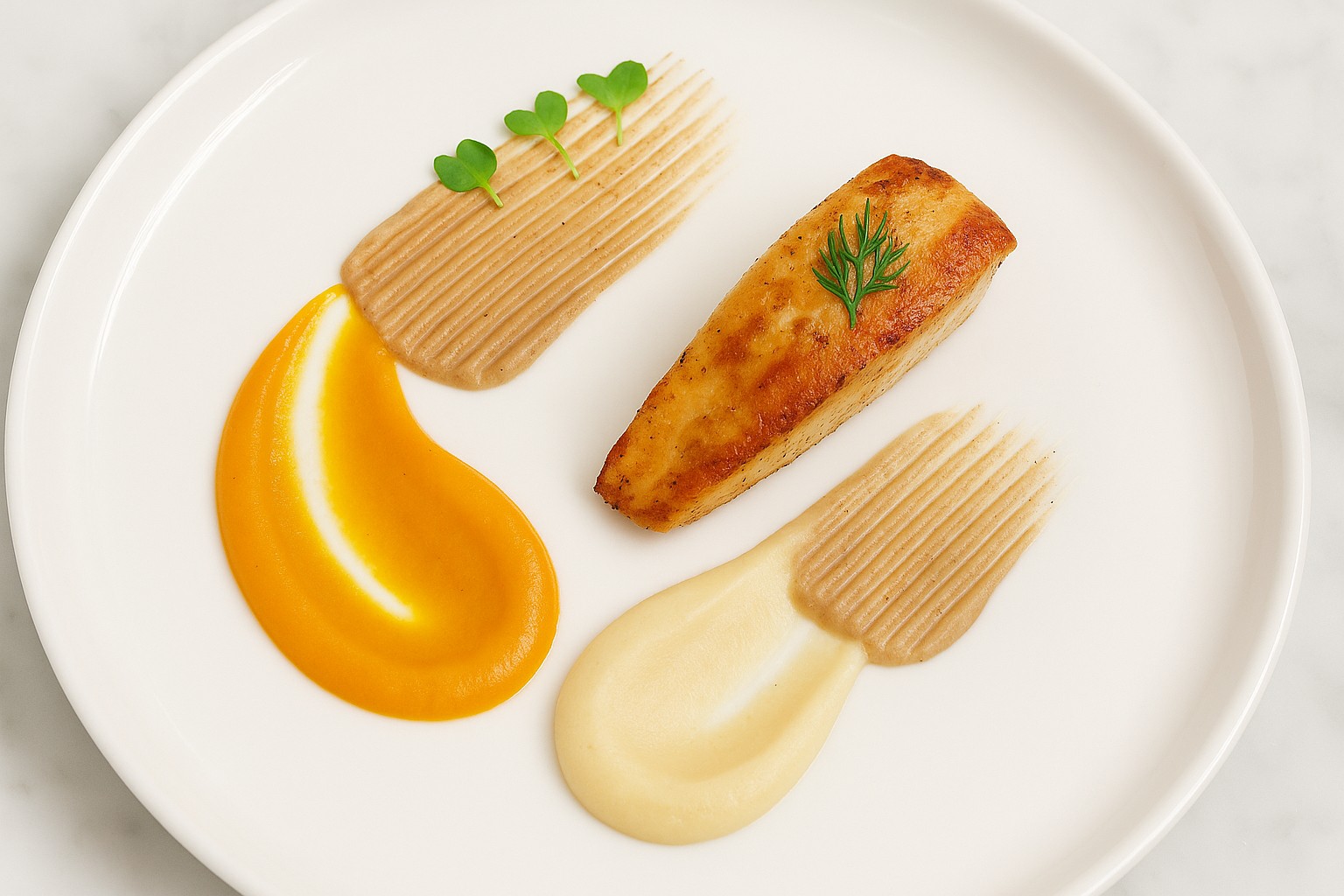
Practical answers to common food plating questions, from choosing a plate to arranging everyday meals. Start with one small change and build from there.
Getting started | Plates and arrangement | Sauces and garnishes | Everyday meals | Tools and timing
Getting Started
What is food plating?
Food plating is the way you arrange food on a plate or in a bowl before serving. It includes the placement of the main ingredient, sides, sauces, and garnishes.
What is StyleYourPlate?
StyleYourPlate helps home cooks make everyday meals look thoughtfully presented through practical tips and before-and-after examples. Read our story.
How do I make home-cooked food look like restaurant food?
Choose a plate that fits the portion, give the main ingredient a clear place, and arrange the sides deliberately. Finish with a little sauce or a suitable garnish, then wipe the rim. Try one adjustment at a time.
What are the basic rules of food plating?
Use a clear focal point, leave some open space, show the ingredients, and keep the rim clean. Treat these as starting points, then adapt the arrangement to the meal and how it will be eaten.
What is the easiest plating technique for beginners?
Start by cleaning the rim and separating ingredients enough that each can be seen. You can practice with the next meal you cook. Browse our plating tips for visual examples.
Do I need professional training or artistic talent?
No. Start with a repeatable arrangement and compare the result before and after a small change. You can learn by looking, trying, and adjusting.
What are common food plating mistakes?
Watch for overcrowding, hidden ingredients, stray sauce on the rim, unstable stacks, and garnishes that do not complement the food. Simplifying the arrangement is a useful first correction.
Choosing and Arranging the Plate
What size plate should I use?
Choose a plate that holds a satisfying portion with some room around it. It should allow comfortable cutting and eating without looking cramped. There is no single plate size that suits every dish.
Are white or dark plates better for food presentation?
Both can work. White provides a simple background for colorful ingredients. Dark plates can contrast with pale food. Compare the dish on the plates you own and choose the one that makes its ingredients easiest to see.
How much empty space should I leave on a plate?
Leave enough room to distinguish the food from the rim and keep the composition comfortable. There is no fixed percentage to follow. Adjust the space to the portion, vessel, and type of food.
Where should I put the meat, vegetables, and starch?
Give the main ingredient a clear position, then place the sides where they support it without hiding it. A loose triangle or gentle curve is a useful starting point. Keep foods separate when you want to preserve their individual textures.
How do I add height without making food unstable?
Build a low, broad base and lean or overlap a few pieces. Keep the arrangement easy to eat. Avoid balancing food in a tall stack that may collapse on the way to the table.
How do I make a generous portion look less crowded?
Use a suitably sized plate or shallow bowl, group the ingredients, and remove unnecessary decoration. For a shared meal, offer extra food on a separate platter rather than forcing everything onto each plate.
Sauces and Finishing Touches
Should sauce go under, beside, or over the food?
Let the dish guide you. Sauce underneath can provide a base; sauce beside the food lets the diner combine each bite. Pour over the top when coating is part of the dish, while leaving crisp surfaces exposed when you want to preserve their texture.
How do I make sauce dots or a clean drizzle?
Use a smooth sauce that flows consistently. Practice on a spare plate. For dots, hold a squeeze bottle close to the surface and release pressure before lifting. For a drizzle, move steadily and stop before the plate looks busy.
How do I choose a garnish that belongs with the dish?
Choose an edible garnish whose flavor complements the meal, such as a little chopped herb, citrus zest, or toasted crumb. Keep it small enough that the food remains the focus.
Does every dish need a garnish?
No. A browned crust, colorful vegetables, or visible layers may already provide all the detail the plate needs. Add a garnish when it contributes flavor, texture, or a useful accent.
How do I add color to a mostly brown meal?
Look for a vegetable, herb, sauce, or accompaniment that tastes right with the dish. A green side or a small amount of contrasting puree can add interest without introducing decoration solely for color.
Plating Everyday Meals
How do I plate pasta neatly?
Use tongs to gather long pasta into a loose nest, supporting it with a spoon if helpful. For short pasta, spoon it into a defined mound. Keep the sauce with the pasta and wipe splashes from the rim.
How do I arrange sliced steak or chicken?
After resting the meat as appropriate, arrange slices in a loose fan or slightly overlapping line with the cut surfaces visible. Keep the portion together and position the sides so they do not cover the slices.
How do I make mashed potatoes look better?
Spoon them into one defined mound or oval. Use the back of a spoon to smooth the surface or make a shallow channel for gravy. Leave some potato visible after adding sauce.
How do I plate a salad attractively?
Build a loose mound and distribute colorful ingredients so they remain visible. Put a few of the most appealing pieces on top and add dressing without burying the leaves or flooding the plate.
How do I make a dessert look special?
Start with a clean slice or defined scoop and give it room. Show the layers or texture, then add one suitable accompaniment, such as fruit or a little sauce.
How do I arrange a family-style serving platter?
Choose a focal point and arrange the remaining food in loose groups around it. Leave room for a serving spoon or tongs and make each component easy to reach.
Tools, Timing, and Learning More
Do I need special food plating tools?
No. A spoon, tongs, a small spatula, and a clean cloth are useful starting tools. Squeeze bottles, ring molds, and tweezers are optional tools for techniques you may want to explore later.
How do I keep food hot while plating?
Plan the arrangement before cooking finishes and have the plates and utensils ready. Use warmed plates when the manufacturer says they are suitable, keep the finishing steps brief, and serve promptly.
What can I prepare before guests arrive?
Choose your serving vessels, set out utensils, plan the arrangement, and prepare suitable sauces and garnishes ahead. Keep ingredients stored appropriately and add delicate or crisp finishing touches just before serving.
How do I plate several meals quickly?
Set the plates together and add the same component to each in sequence. Use one simple arrangement, keep garnishes ready, and avoid extra steps that delay service.
How long do these techniques take?
The time depends on the technique and how many plates you are serving. A rim wipe or small adjustment can be quick; detailed sauce work or arranging several portions takes longer. Pick a finish that fits your meal.
Is food plating only for special occasions?
No. Practice with breakfast, a sandwich, pasta, or a weeknight dinner. One small change is enough to begin. Read Why Plate Your Food? for more ideas.
Where can I find videos and follow StyleYourPlate?
Visit Meet the Chefs for chef demonstrations and use the social links in our footer to follow along. Our plating tips collection provides more ideas to practice.
Get Simple Plating Tips
Enter your name and email for food plating ideas you can try at home. Unsubscribe anytime.