
Waste Less, Taste More 007
A smooth soup gives them a new presentation.
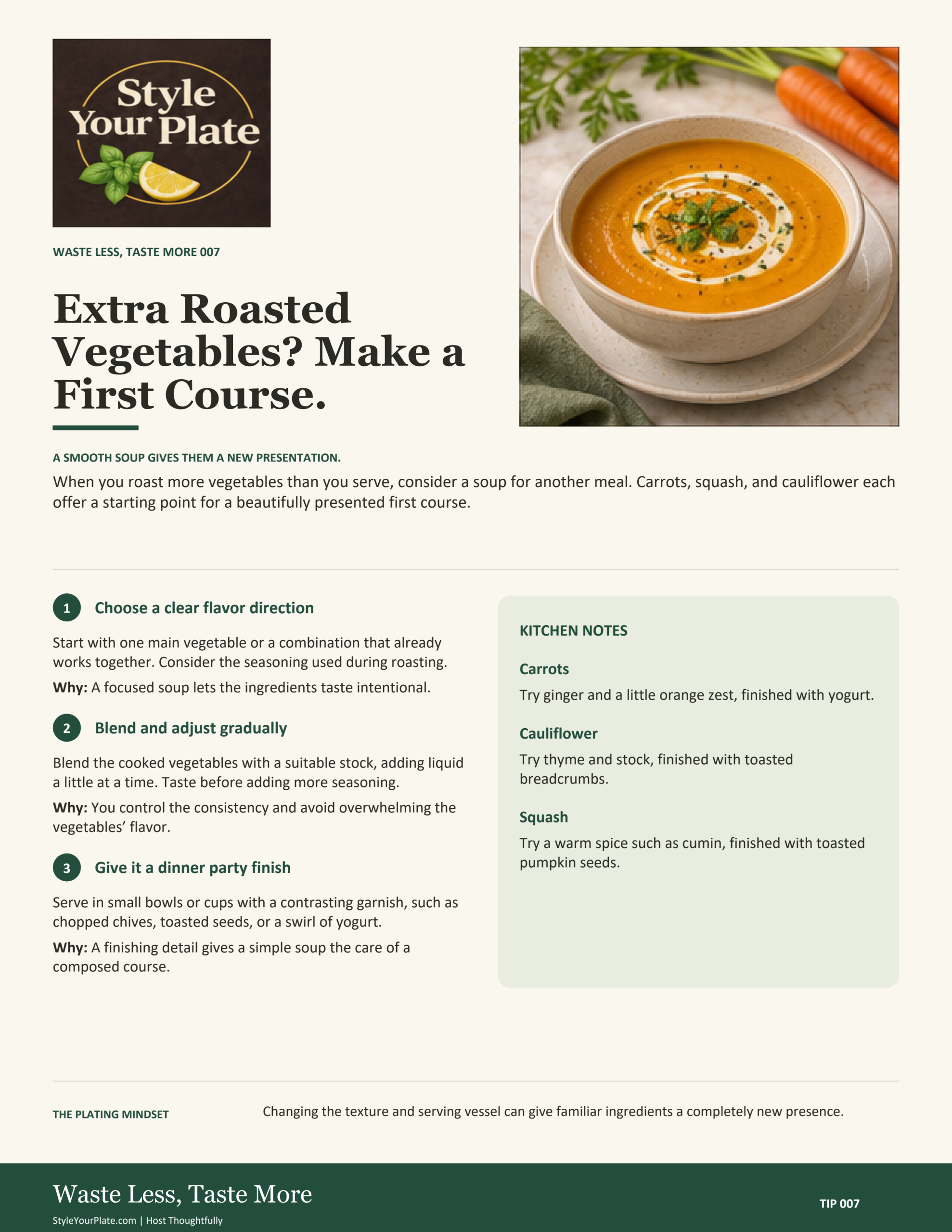
When you roast more vegetables than you serve, consider a soup for another meal. Carrots, squash, and cauliflower each offer a starting point for a beautifully presented first course.
Download the printable 8.5 × 11 PDF
1. Choose a clear flavor direction
Start with one main vegetable or a combination that already works together. Consider the seasoning used during roasting.
Why: A focused soup lets the ingredients taste intentional.
2. Blend and adjust gradually
Blend the cooked vegetables with a suitable stock, adding liquid a little at a time. Taste before adding more seasoning.
Why: You control the consistency and avoid overwhelming the vegetables’ flavor.
3. Give it a dinner party finish
Serve in small bowls or cups with a contrasting garnish, such as chopped chives, toasted seeds, or a swirl of yogurt.
Why: A finishing detail gives a simple soup the care of a composed course.
Kitchen Notes
Carrots
Try ginger and a little orange zest, finished with yogurt.
Cauliflower
Try thyme and stock, finished with toasted breadcrumbs.
Squash
Try a warm spice such as cumin, finished with toasted pumpkin seeds.
The plating mindset
Changing the texture and serving vessel can give familiar ingredients a completely new presence.