
Waste Less, Taste More 015
Wrap, bag, or box with a purpose.
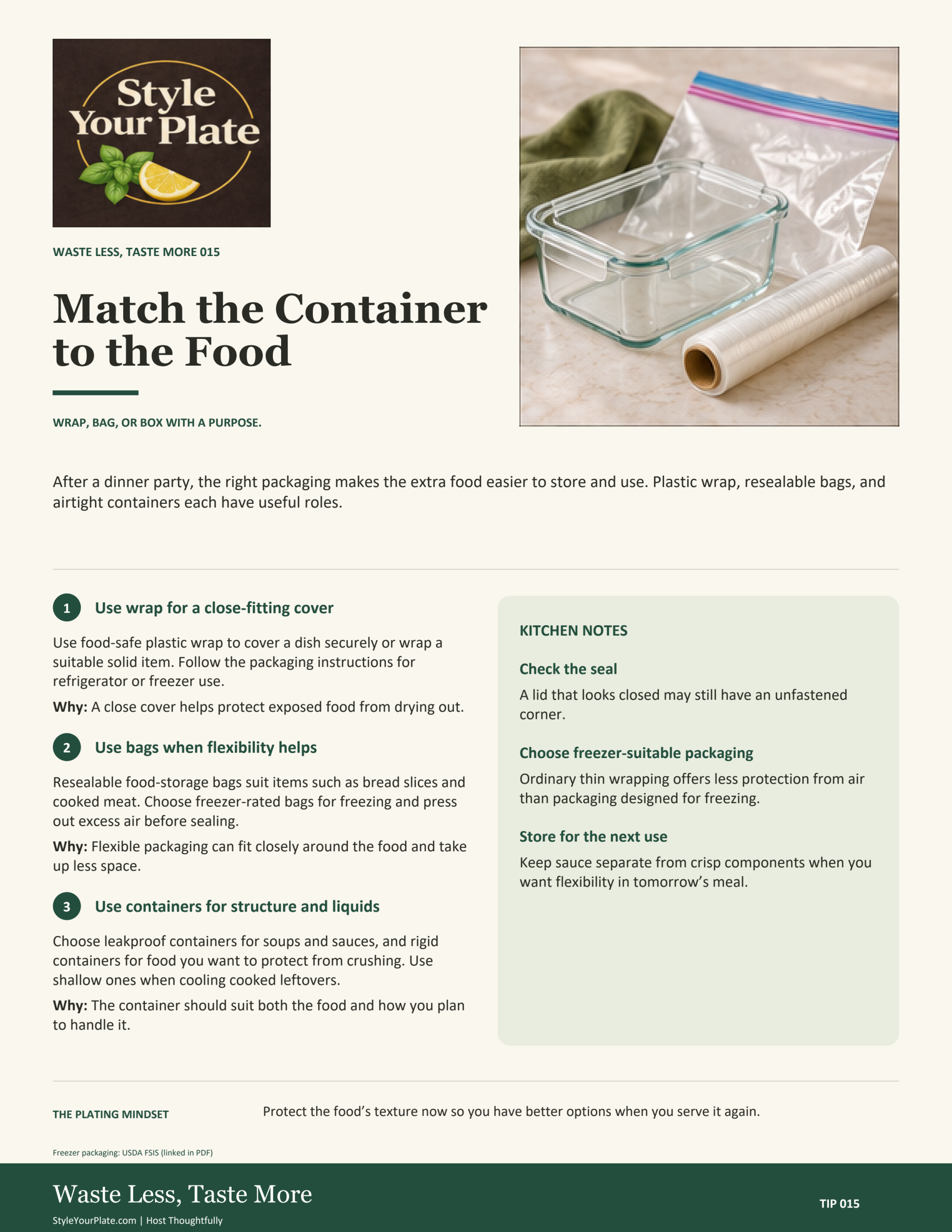
After a dinner party, the right packaging makes the extra food easier to store and use. Plastic wrap, resealable bags, and airtight containers each have useful roles.
Download the printable 8.5 × 11 PDF
1. Use wrap for a close-fitting cover
Use food-safe plastic wrap to cover a dish securely or wrap a suitable solid item. Follow the packaging instructions for refrigerator or freezer use.
Why: A close cover helps protect exposed food from drying out.
2. Use bags when flexibility helps
Resealable food-storage bags suit items such as bread slices and cooked meat. Choose freezer-rated bags for freezing and press out excess air before sealing.
Why: Flexible packaging can fit closely around the food and take up less space.
3. Use containers for structure and liquids
Choose leakproof containers for soups and sauces, and rigid containers for food you want to protect from crushing. Use shallow ones when cooling cooked leftovers.
Why: The container should suit both the food and how you plan to handle it.
Kitchen Notes
Check the seal
A lid that looks closed may still have an unfastened corner.
Choose freezer-suitable packaging
Ordinary thin wrapping offers less protection from air than packaging designed for freezing.
Store for the next use
Keep sauce separate from crisp components when you want flexibility in tomorrow’s meal.
The plating mindset
Protect the food’s texture now so you have better options when you serve it again.