Make Your Food Pop with Color
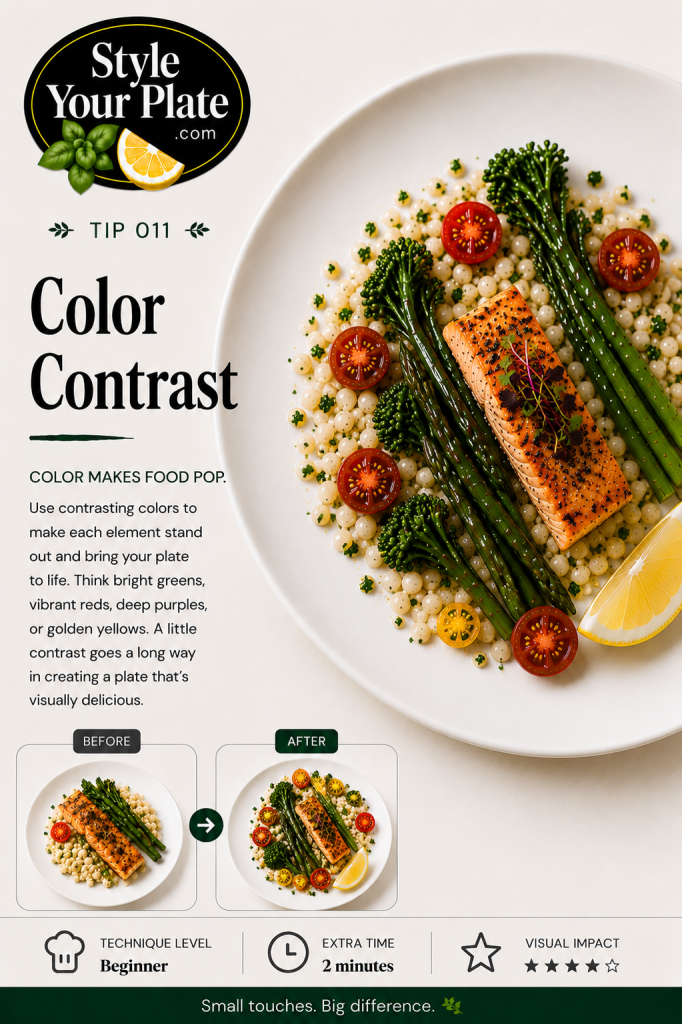
Color is one of the easiest ways to make a plate more visually appealing. Pair contrasting colors so individual ingredients stand out instead of blending together. Bright greens, vibrant reds, deep purples, and golden yellows can bring even a simple meal to life.
Why It Works
Our eyes naturally notice differences in color. When contrasting colors are placed next to each other, each ingredient becomes more distinct and the plate feels more vibrant and balanced. A few well chosen colors can create visual interest without adding extra ingredients just for decoration.
The Technique
Start with Your Main Ingredient
Look at the dominant color of your main ingredient and build around it. Salmon already provides a strong orange tone, so surrounding it with contrasting greens immediately makes both colors more noticeable.
Add a Contrasting Vegetable
Use vegetables to introduce natural color. Green vegetables such as broccolini, asparagus, spinach, or green beans contrast particularly well with salmon, chicken, grains, and other neutral colored foods.
Add Small Pops of Color
You do not need large portions of every color. A few red or yellow tomatoes, fresh herbs, sliced radishes, citrus, or another colorful ingredient can provide enough contrast to change the appearance of the entire plate.
Keep It Balanced
More color is not always better. Choose two or three colors that complement the food and distribute them intentionally around the plate. The goal is contrast, not a plate crowded with competing colors.
Quick Tips
- Pair warm colors with cool greens.
- Use colorful vegetables you already plan to eat.
- Add small pops of red, yellow, or purple.
- Let a white or neutral plate provide a clean background.
- Repeat a color in two or three places to create balance.
Before and After
The before plate contains many of the same ingredients, but the colors are concentrated together and have less separation, making the presentation feel more uniform.
The after plate distributes contrasting greens, reds, yellows, and orange throughout the presentation. Separating and repeating these colors helps define each ingredient and gives the plate more visual energy.
Try It Yourself
Before serving your next meal, look at the colors already on the plate. If everything looks similar, add one contrasting ingredient you would actually enjoy eating. A green vegetable, colorful tomato, fresh herb, or wedge of citrus may be all you need to make the entire plate stand out.
Email us anytime at: