Odd Numbers Create Better Looking Plates
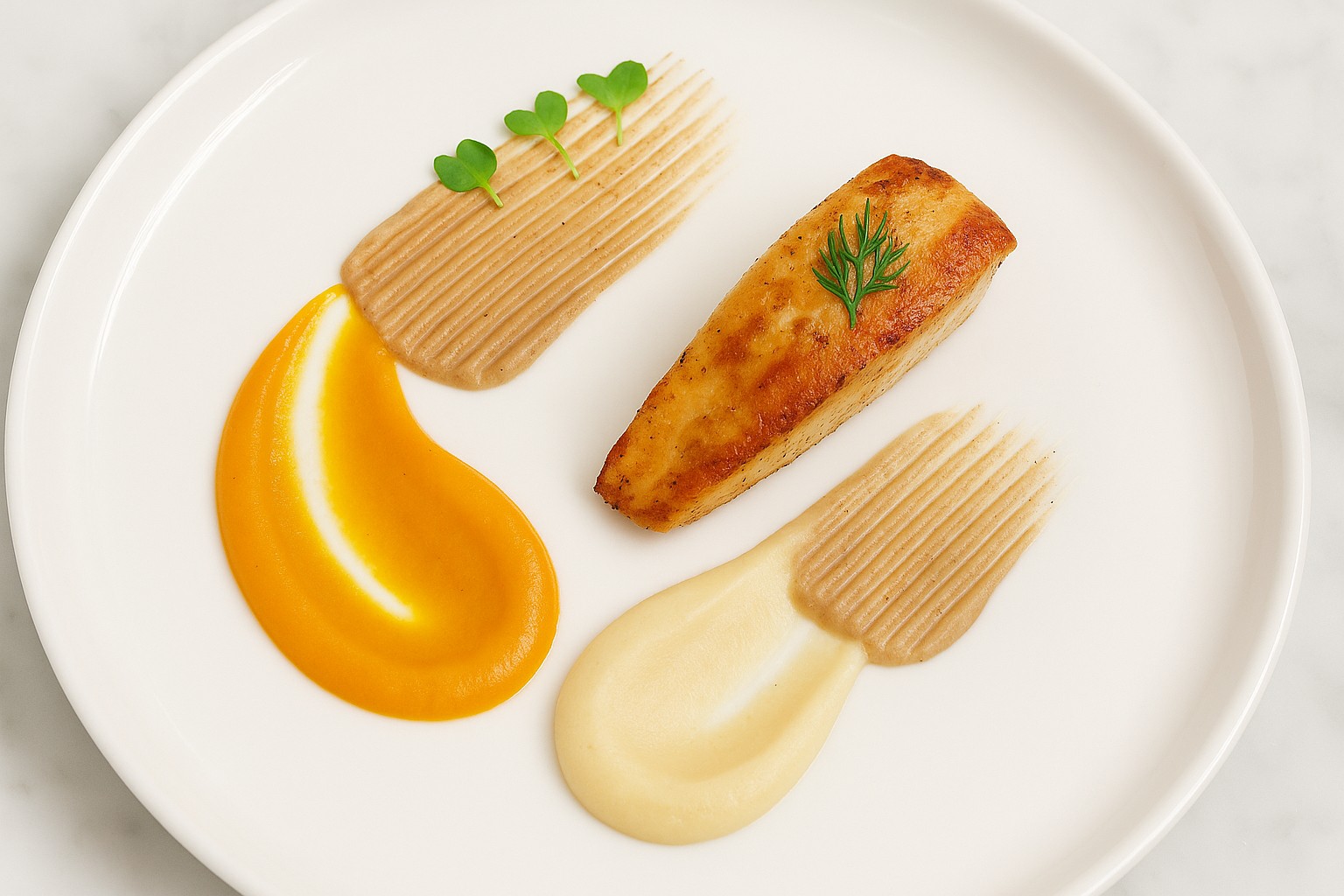
One of the easiest ways to make food look more professional is to arrange ingredients in odd numbers. Three is the most versatile choice because it creates natural balance without looking overly symmetrical.
Whether you’re plating scallops, shrimp, asparagus, roasted carrots, or small desserts, grouping items in threes helps guide the eye and gives the plate movement and rhythm.
The Technique
Instead of lining food up evenly, arrange three similar items into a loose triangle or gentle curve.
Examples include:
- Three scallops instead of two or four.
- Three asparagus spears instead of a bundle.
- Three dots of sauce instead of one large blob.
- Three herb leaves or microgreens instead of scattering many.
The arrangement should feel intentional while still looking natural.
Why It Works
Our brains naturally find odd numbers more visually interesting than even numbers. Even numbers often appear formal or static, while groups of three create energy and movement.
Professional chefs frequently use this principle because it helps create a focal point without making the plate feel crowded.
Where to Use It
The Rule of Three works especially well with:
- Scallops
- Shrimp
- Meat medallions
- Roasted vegetables
- Asparagus
- Sauce dots
- Herb garnishes
- Small desserts
- Fruit presentations
- Tapas and appetizers
Common Mistakes
Avoid these common pitfalls:
- Using four identical items when three creates a stronger composition.
- Making every piece exactly the same size and spacing.
- Arranging ingredients in perfectly straight lines.
- Overcrowding the center of the plate.
- Forgetting to leave negative space around the food.
Remember that three creates balance, but spacing and proportion are just as important.
Before and After
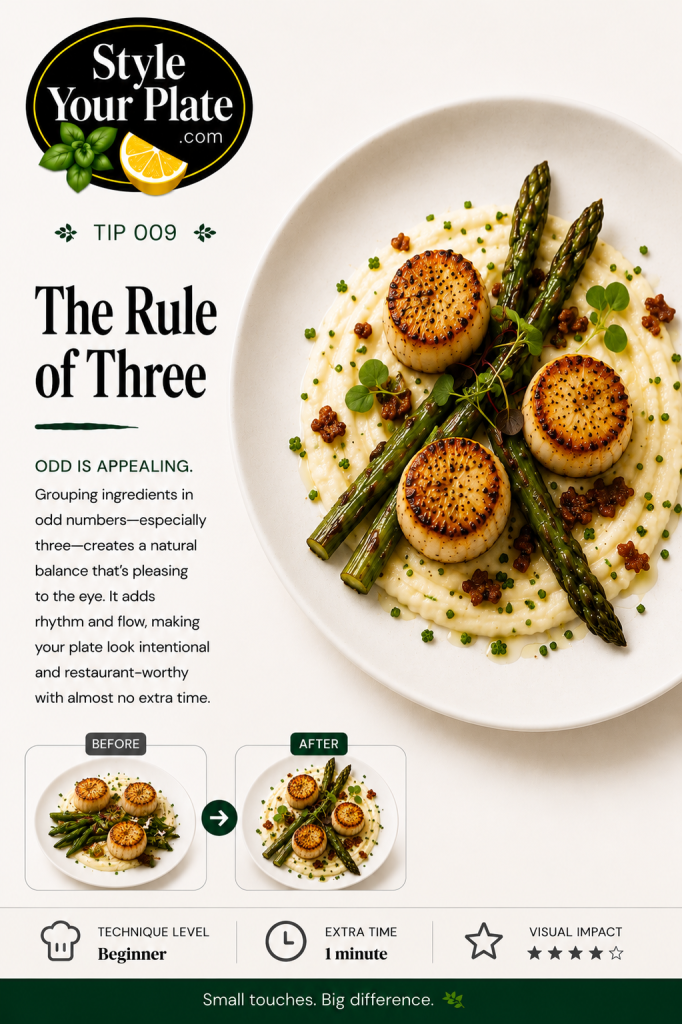
The “before” plate contains the same ingredients but feels more rigid and less intentional.
The “after” plate groups the scallops into a natural triangle while the asparagus creates diagonal lines that lead your eye around the plate. Small garnishes and sauce accents reinforce the composition, making the dish feel elegant and restaurant quality without adding more food.
Try This Technique
The next time you plate dinner, look for opportunities to group similar ingredients in threes. Whether it’s three scallops, three roasted carrots, or three small dollops of sauce, this simple adjustment instantly creates a more polished presentation.
Email us anytime at: