Give Your Plate More Dimension
A flat plate can make even well prepared food look ordinary. Adding height creates dimension, gives the eye a clear place to focus, and makes the presentation feel more intentional. Stack, lean, or prop ingredients instead of placing everything flat on the plate.
Why It Works
Height creates visual interest by giving the plate different levels. It helps separate ingredients, establishes a focal point, and makes the food appear more structured. Even a small amount of elevation can make a simple meal look more thoughtfully presented.
The Technique
Stack Ingredients
Layer or stack ingredients when their shape and texture allow it. Vegetables, sliced meats, potatoes, grains, and other firm foods can often be arranged vertically instead of spread across the plate.
Lean for Height
Lean one ingredient against another to create elevation without building a full stack. Sliced meat can rest against vegetables, toast can lean against a salad, or asparagus can support a piece of fish or meat.
Build a Base
Use mashed potatoes, rice, grains, purées, or vegetables as a base for the main ingredient. Placing the protein partly on top of the base immediately creates height and connects the elements of the plate.
Keep It Stable
Height should look natural and remain easy to eat. Avoid building something so tall or complicated that it falls apart when the plate is moved. A little elevation is usually enough.
Quick Tips
- Build around one main focal point.
- Stack or overlap ingredients instead of spreading them flat.
- Use a side dish as a base for the protein.
- Lean ingredients together to create natural height.
- Keep the arrangement stable and easy to eat.
Before and After
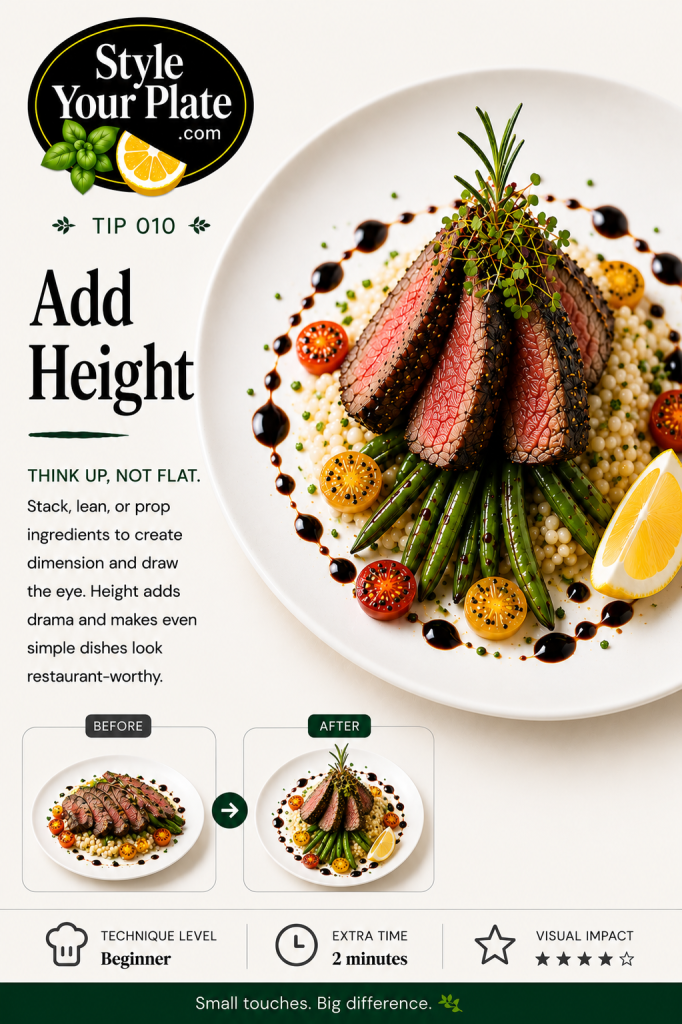
The before plate spreads the ingredients across the plate at roughly the same level, creating a flatter presentation.
The after plate uses stacked and leaning ingredients to create a taller focal point. The added height gives the plate more dimension, draws attention toward the center, and makes the same ingredients feel more intentionally arranged.
Try It Yourself
The next time you plate dinner, choose one part of the meal and raise it slightly. Stack a few slices, lean the protein against a vegetable, or place it partly over a mound of rice or potatoes. You do not need a dramatic tower. Just a little height can make the entire plate look more polished.
Email us anytime at: