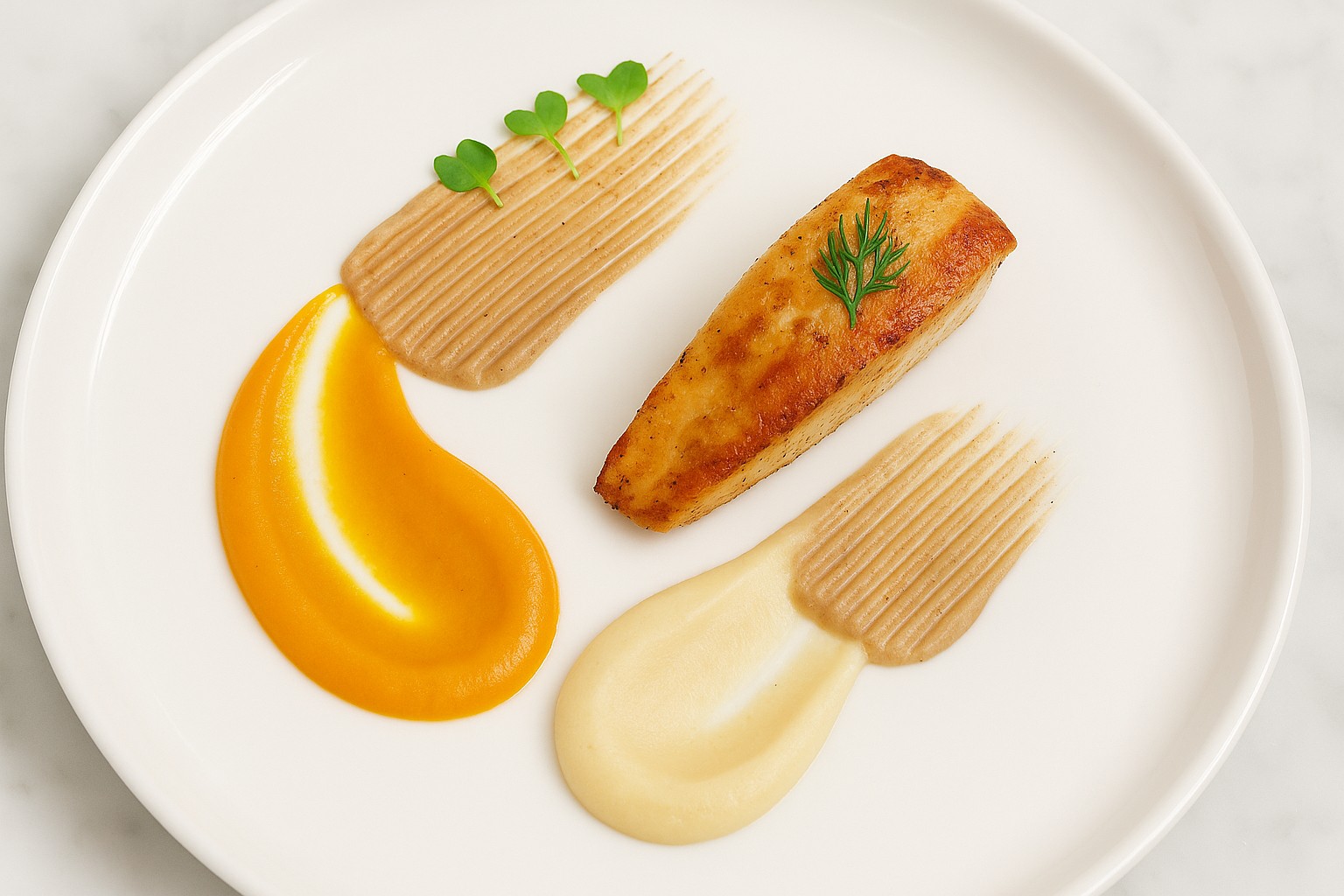
Create a More Natural and Balanced Presentation
One of the simplest plating techniques is to arrange individual pieces of food in odd numbers.
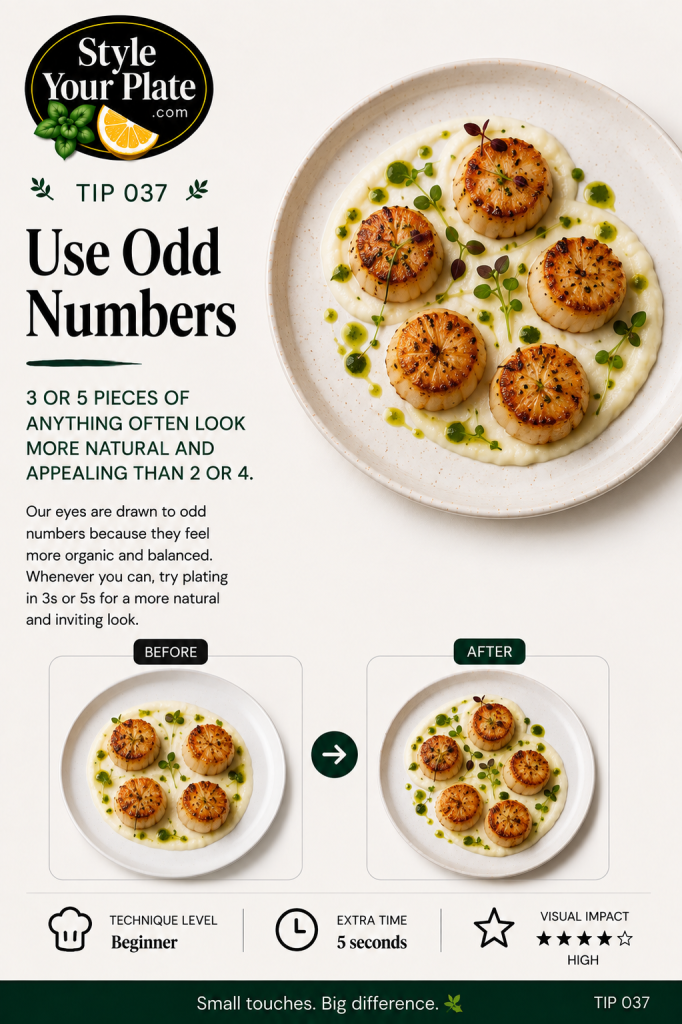
Three or five pieces often create a more natural and visually interesting arrangement than two or four. Whether you’re serving scallops, shrimp, vegetables, or small appetizers, this small adjustment can improve the overall appearance of a dish.
Why It Works
Odd-numbered arrangements can create a sense of movement and a less predictable composition. They encourage the eye to travel between the individual pieces rather than viewing them as identical pairs.
This is a useful design technique, although even numbers can also look beautiful when used intentionally.
How to Use Odd Numbers in Plating
Choose Foods That Can Be Arranged Individually
This technique works particularly well with scallops, shrimp, dumplings, meat medallions, and individual vegetables.
Start With Three or Five Pieces
Whenever portion sizes allow, experiment with groups of three or five rather than arranging everything in even pairs.
Avoid Perfect Symmetry
Instead of placing the ingredients in rigid rows, try a loose triangular arrangement or a gentle curve.
Vary the Position Slightly
Allow individual pieces to occupy slightly different positions while maintaining enough space to distinguish each one.
Balance the Supporting Ingredients
Arrange sauces, purees, and garnishes around the main components so the entire plate feels cohesive.
Quick Tips
The next time you serve scallops or shrimp, try arranging three or five pieces before adding the garnishes. Compare the result with an even-numbered arrangement.
Before and After
Before: Four seared scallops are positioned in a symmetrical arrangement over a creamy puree. The presentation looks orderly but somewhat rigid.
After: Five scallops are arranged in a more natural composition, with green sauce and small garnishes adding movement around the plate.
Email us anytime at: