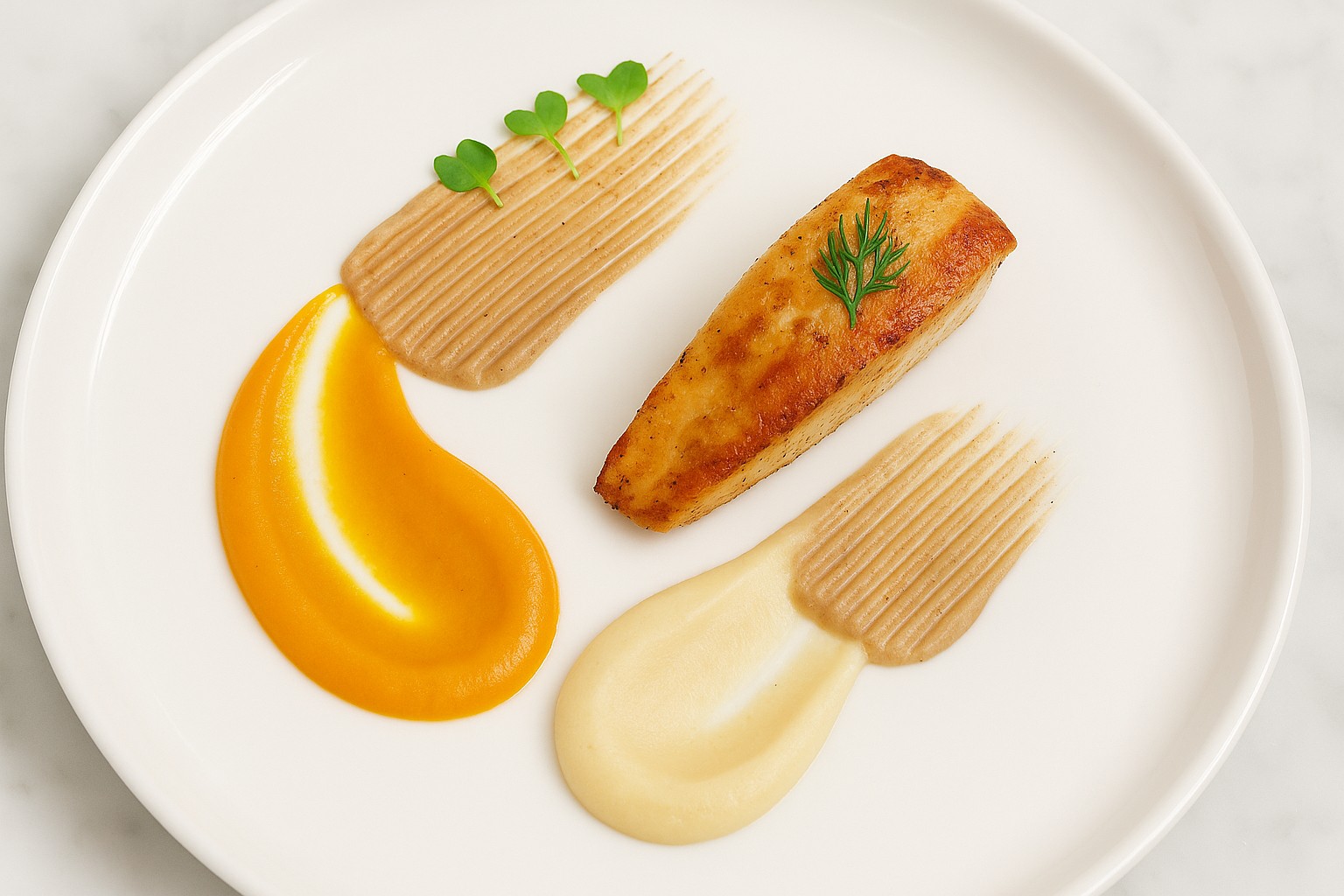
Add Contrast You Can See and Taste
Texture is not just about how food feels when you eat it. It also changes how a plate looks. Combining creamy, crisp, crunchy, tender, and smooth elements creates contrast that makes the dish feel more interesting and complete.
Why It Works
When every component has the same texture, a plate can feel one dimensional. Mixing textures adds visual depth and gives each bite more variety. A crisp garnish over something creamy, or a crunchy element beside a tender protein, creates contrast that makes the food more engaging.
The Technique
Start with the Main Texture
Look at the dominant texture already on the plate. If the dish is mostly soft or creamy, add something crisp or crunchy. If it is already crunchy, consider adding something smooth or creamy for balance.
Add One Contrasting Element
You do not need several extra ingredients. One well chosen texture can be enough. Toasted nuts, crispy onions, breadcrumbs, seeds, fresh vegetables, or a creamy purée can completely change the experience of the dish.
Use Texture for Height
Crunchy garnishes and crisp vegetables can also help build height. Place them on top of or alongside softer foods to create both physical and visual contrast.
Keep It Edible
Every textured element should belong on the plate and work with the flavors of the dish. Avoid adding something simply because it looks interesting. The best texture improves both presentation and taste.
Quick Tips
- Pair creamy foods with something crisp or crunchy.
- Add toasted nuts, seeds, or breadcrumbs for an easy finishing texture.
- Use crisp vegetables to contrast with tender proteins.
- Keep crunchy garnishes dry until serving.
- Add delicate crisp elements at the last moment.
- Choose textures that complement the flavor of the dish.
Before and After
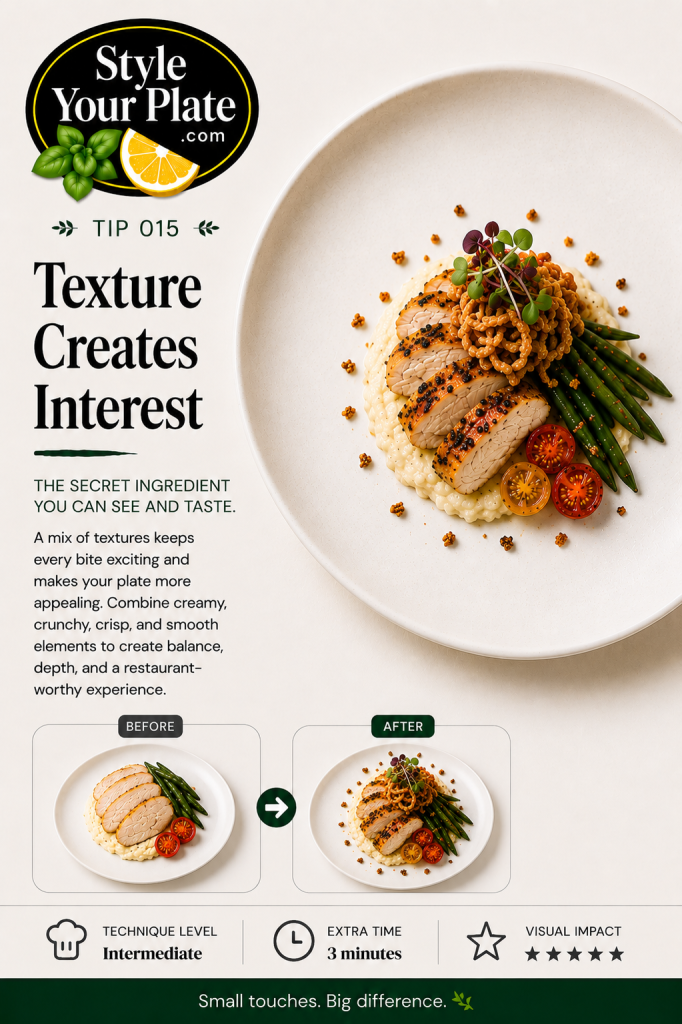
The before plate is visually clean, but most of the components have similar soft and tender textures.
The after plate introduces crisp and crunchy elements that add contrast to the creamy base and tender protein. The different textures create more depth, movement, and visual interest while also making each bite more varied.
Try It Yourself
Look at your next plate and identify its dominant texture. Then add one contrasting element. Sprinkle something crisp over a creamy dish, add a crunchy garnish to a tender protein, or pair a smooth purée with fresh vegetables. One small texture change can make the entire plate feel more complete.
Email us anytime at: