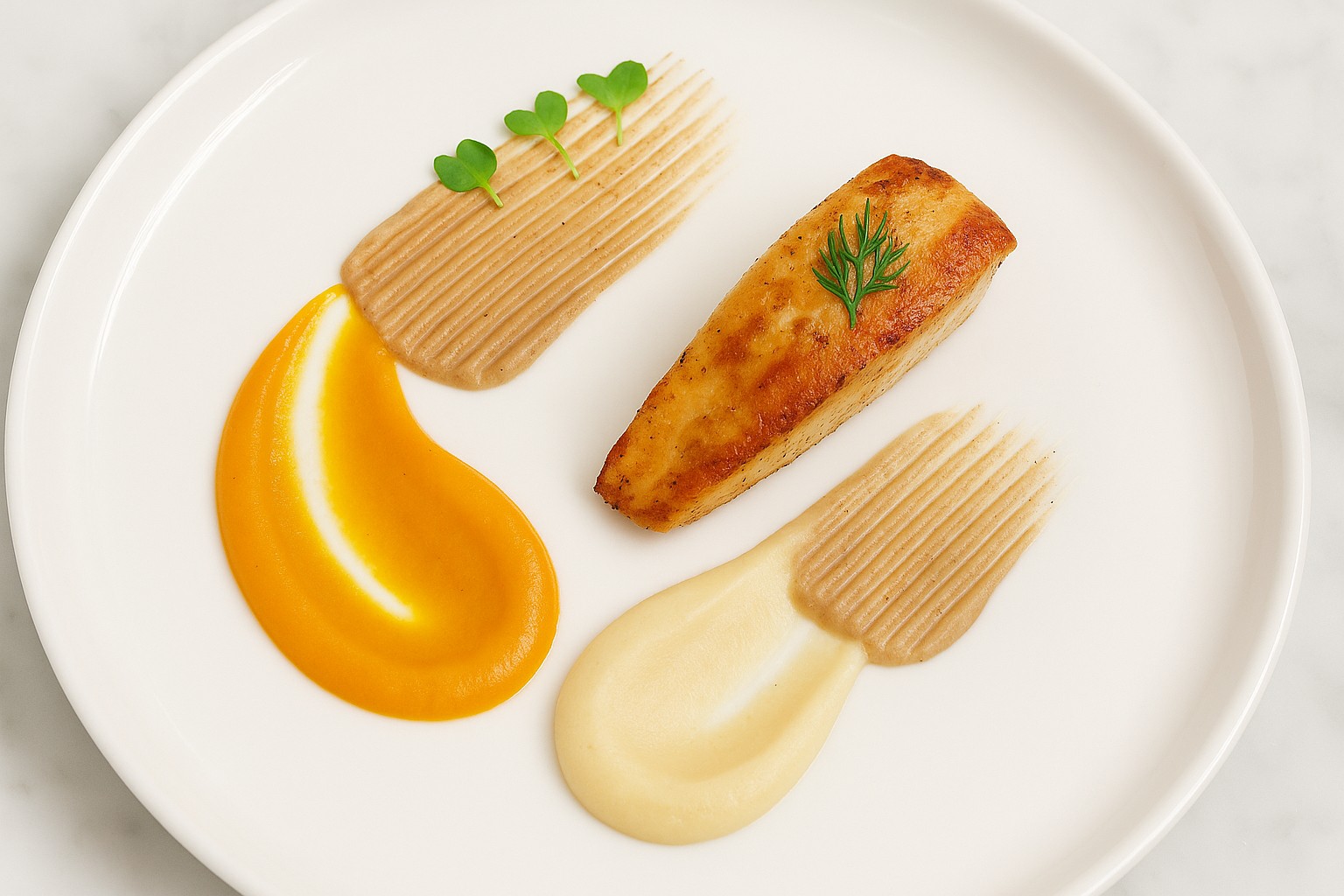
Waste Less, Taste More 026
A smooth purée gives them a different role.
If you prepare more beans than you serve, blend a suitable portion into a purée. It can become a flavorful base beneath vegetables, mushrooms, meat, or fish.
Download the printable 8.5 × 11 PDF
1. Check the original seasoning
Consider whether the beans were cooked with herbs, spices, tomato, or stock.
Why: Those flavors will carry into the purée and should suit the next dish.
2. Blend gradually
Follow a bean purée recipe, adding liquid a little at a time. Adjust the seasoning and texture as you go.
Why: A controlled consistency is easier to spoon and arrange.
3. Build the plate around contrast
Pair the smooth purée with browned mushrooms, roasted vegetables, or another ingredient with a distinct texture.
Why: Contrasting textures make the purée feel like a deliberate component.
Kitchen Notes
White beans and mushrooms
Spoon white bean purée onto the plate and gather sautéed mushrooms over part of it.
Chickpeas and roasted vegetables
Try a chickpea purée with roasted carrots and a complementary herb dressing.
Choose the consistency for the job
A base beneath food may need to be thicker than a sauce spooned around it.
The plating mindset
Changing the texture can give extra beans an entirely different place on the plate.