
Waste Less, Taste More 041
Let the whole vegetable contribute.
When trimming cauliflower for a dinner party, look at the leaves and core before discarding them. Sound, tender parts can join the dish in a different form.
Download the printable 8.5 × 11 PDF
1. Sort the usable parts
Keep tender inner leaves and suitable core pieces. Discard damaged parts and trim tough sections as needed.
Why: Different parts need different preparation.
2. Give each part an appropriate role
Use core pieces in a cooked purée or soup. Roast tender leaves separately, watching them closely.
Why: The leaves can cook much faster than thick pieces of core.
3. Bring the components together
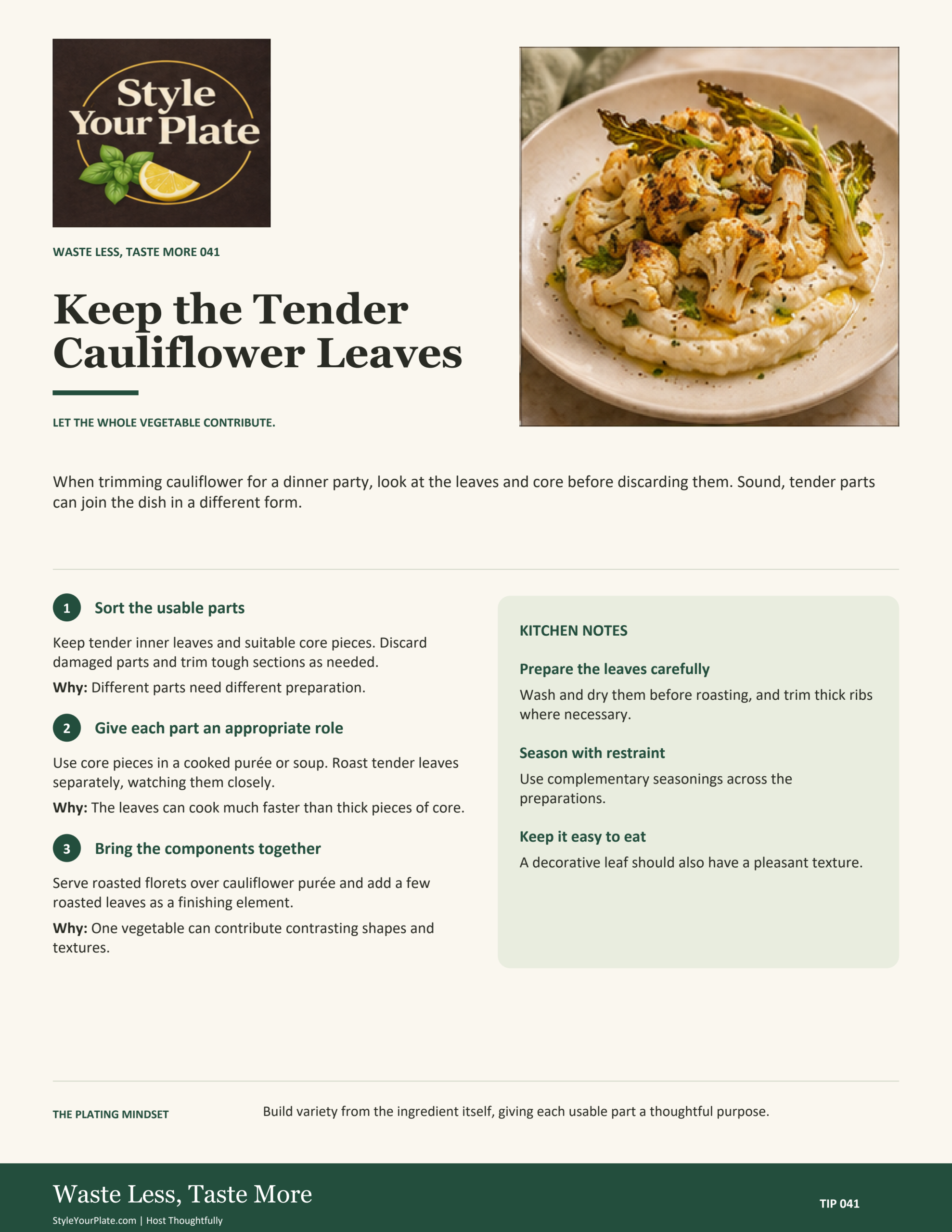
Serve roasted florets over cauliflower purée and add a few roasted leaves as a finishing element.
Why: One vegetable can contribute contrasting shapes and textures.
Kitchen Notes
Prepare the leaves carefully
Wash and dry them before roasting, and trim thick ribs where necessary.
Season with restraint
Use complementary seasonings across the preparations.
Keep it easy to eat
A decorative leaf should also have a pleasant texture.
The plating mindset
Build variety from the ingredient itself, giving each usable part a thoughtful purpose.