
Waste Less, Taste More 048
Protect each cheese’s flavor and texture.
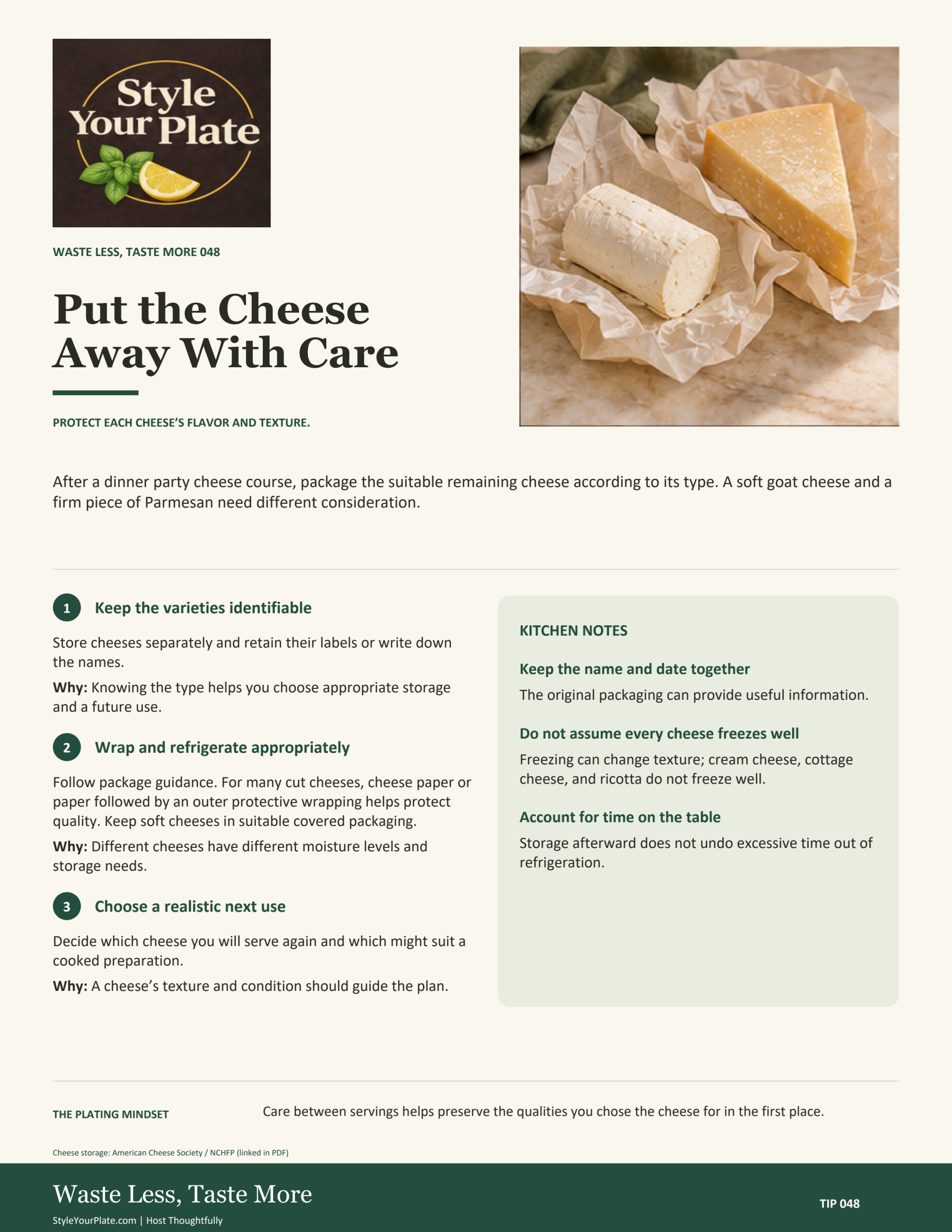
After a dinner party cheese course, package the suitable remaining cheese according to its type. A soft goat cheese and a firm piece of Parmesan need different consideration.
Download the printable 8.5 × 11 PDF
1. Keep the varieties identifiable
Store cheeses separately and retain their labels or write down the names.
Why: Knowing the type helps you choose appropriate storage and a future use.
2. Wrap and refrigerate appropriately
Follow package guidance. For many cut cheeses, cheese paper or paper followed by an outer protective wrapping helps protect quality. Keep soft cheeses in suitable covered packaging.
Why: Different cheeses have different moisture levels and storage needs.
3. Choose a realistic next use
Decide which cheese you will serve again and which might suit a cooked preparation.
Why: A cheese’s texture and condition should guide the plan.
Kitchen Notes
Keep the name and date together
The original packaging can provide useful information.
Do not assume every cheese freezes well
Freezing can change texture; cream cheese, cottage cheese, and ricotta do not freeze well.
Account for time on the table
Storage afterward does not undo excessive time out of refrigeration.
The plating mindset
Care between servings helps preserve the qualities you chose the cheese for in the first place.